
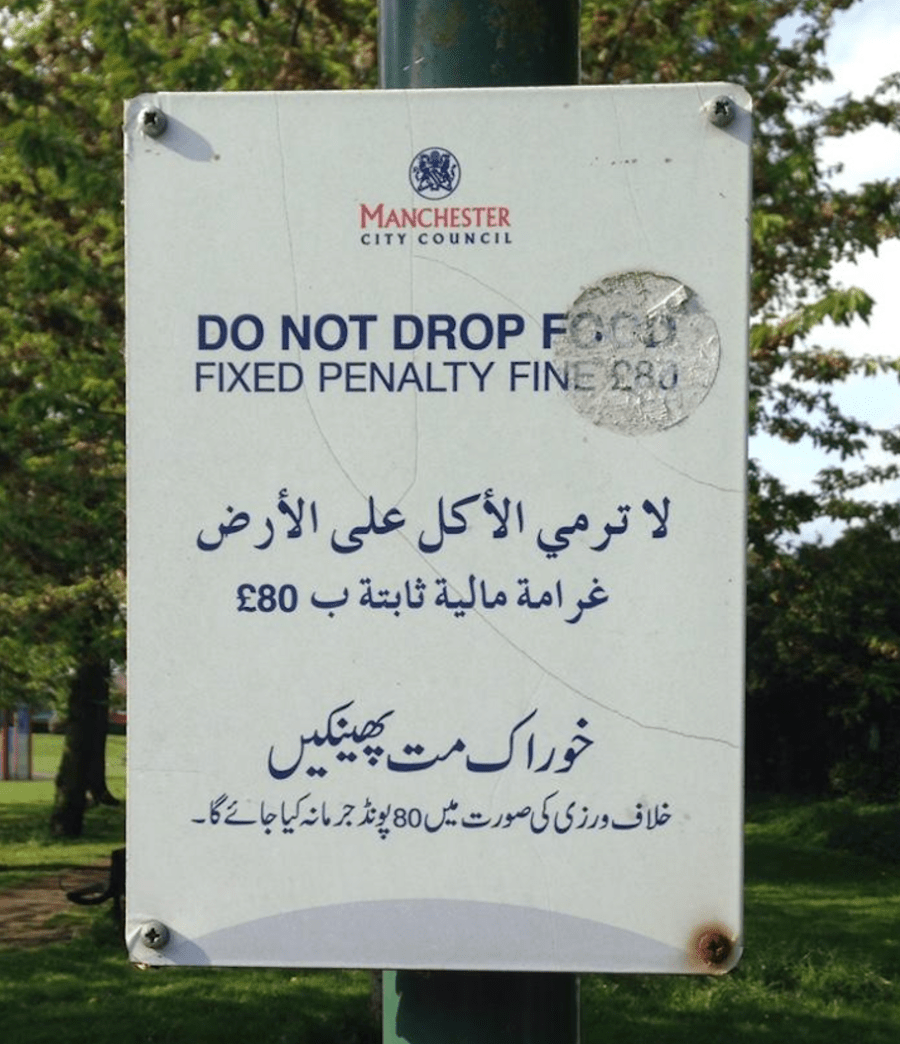
Manchester City of Languages believes that we should talk about languages in the wider context of a multilingual society; promoting languages is not just about teaching languages as skills to English people, or teaching English to foreigners, though both are important and essential parts of a language policy. Some fifty percent of young people in major cities are multilingual before they enter school. Multilingualism is part of their heritage and intergenerational culture and wellbeing. Supporting it is key to developing confidence and equal opportunities. Many in Britain still see home multilingualism as a threat. While some policy reports have highlighted the need to acknowledge the country’s multilingualism as a social cohesion priority, many policy statements try instead to appeal to the nationalist instinct, linking the study of other languages to Britain’s global power aspirations.
We believe in the need to change the discourse and to be inventive with solutions to the challenges of a multilingual society. We understand that innovation is often seen as opposition, and that this can create discomfort, especially in settings where conformism is valued above anything else. We call on our colleagues in other cities to make an effort to overcome that discomfort and to join us in reflecting on strategies and delivery mechanisms to forward linguistic equality.
To that end we are publishing our document ‘Towards a Language Strategy for Cities‘. It presents a catalogue of principles and measures that can be taken into consideration as part of a comprehensive language policy that can be implemented at city level.
We invite you to get in touch with comments, suggestions to expand or amend the document, and examples of good practice where relevant measures have been piloted and tested.
 City of Languages